Gutschein Family Legacy: A Legacy of Resilience and Memory
Welcome to the Gutschein Family Legacy, where we honor our past, celebrate our present, and preserve our heritage for future generations.
This site is dedicated to the memory of our ancestors, to commemorate their courage, and to share the stories that have shaped our family.
Explore our family tree, learn about the Stolperstein memorials, and dive into the history that continues to live within us.

Here is a picture of Sigi in Berlin, with his first wife, Cilly
What We Commemorate
This is a space where we remember the Gutschein family’s journey of resilience, survival, and love. From our European roots to our new beginnings in Israel, our family has faced immense challenges. Through this site, we commemorate not only those who suffered and survived the Holocaust, but also the strength they passed down to us.
Each generation has contributed to the legacy of resilience and perseverance that defines our family today. The Stolperstein memorials placed in Berlin are a testament to our enduring memory. They represent the lives, stories, and sacrifices of those who came before us, and their courage in the face of unimaginable hardship.
Jacob Gutschein and Sonia Balsam
Here, you can explore our family tree—a visual representation of our lineage and the deep connections that bind us across generations. This diagram not only shows the roots of our family but also honors the legacy of each branch, every ancestor, and their stories.
Discover how our family has grown, from Europe to Israel and beyond, and see the names and faces that make up our history. Each name holds a piece of the puzzle, and together, we form a united legacy of resilience and love.
Stolperstein Memorials: September 23 2024
Two Stolperstein memorials have been placed in Berlin to honor members of our family, commemorating their lives and the tragedy they endured during the Holocaust. These brass plaques, embedded in the cobblestones, serve as reminders of the loss and the resilience of our ancestors.
Linienstraße 29, 10178 Berlin
-
ADOLF GUTSCHEIN
Born in 1864, fled to Poland but was later deported to Auschwitz, where he was murdered. -
JEANETTE GUTSCHEIN (née SURIN)
Born in 1874, expelled to Poland in 1938, and later deported to Auschwitz, where she was murdered.
Krautstraße, 10243 Berlin (historically Krautstraße 13)
-
JACOB GUTSCHEIN
Born in 1892, fled to Spain in 1934, where he survived. Jacob was murdered by Arabs in the 1946 riots in Jaffa. -
SONJA GUTSCHEIN (née BALSAM)
Born in 1892, fled to Spain in 1934, where she survived. Sonia died in 1958 (Tzipi was 11 months old) and is buried in Aviv.
Jacob and Sonia had 5 children: Max, Edith, Ruth, Dora and Erna.
In 1934/1935 they moved from Germany to Spain via France
They were in Spain 9 years
On February 4 1944 Jacob Sonia Max and Dora arrived in Haifa on the ship “nyasa”
Dora was send kibbutz Gan Shmuel
Jacob Sonia and Max sent to an immigration camp in Tel Aviv
-
MAX GUTSCHEIN
Born in 1920, fled to Spain in 1934, where he survived. Max married Aliza and they had 3 children (Yaakov, Yitzhak, and Tzipi). -
RUTH GUTSCHEIN
Born in 1922, fled to Spain in 1934, where she survived. Married in Venezuela with Erich Nathan and they had Miguel and Vivian
She died on March 10, 1992 -
EDITH GUTSCHEIN
Born in 1924, fled to Spain in 1934, where she survived. Married in spain with Ernesto Rojas and they had Ernesto Pilar Fernando and Susana She died on August 2003 -
DORA GUTSCHEIN
Born in 1929, fled to Spain in 1934, where she survived. Dora married Shlomo and they had David and Jacob. Dora remarried Avraham and Nissim was born after Sonia died - ERNA GUTSCHEIN, who was born October 26, 1925, was left in Berlin (for reasons unknown) in the care of foster parents. It is not known specifically what happened to Erna who may have been deported to Auschwitz where she died
Interestingly, Nissim’s mother Dora and Vivian’s mother Ruth never talked about their parents and did not even know that they had come to Israel.
These Stolpersteine serve as permanent markers of our family’s history, reminding us—and everyone who passes by—that every name represents a life, a story, and a legacy that will never be forgotten
Videos of the Stolperstein Placement: Honoring Our Legacy
In this section, we present the videos from the Stolperstein placement ceremonies, honoring the memory of our family members who faced unimaginable hardships during the Holocaust. These videos capture the powerful moments when we, as a family, came together to lay these memorial stones in Berlin, ensuring that their names and stories will never be forgotten.
Each video reflects the solemn yet hopeful atmosphere of these events, marking a meaningful tribute to our ancestors and their resilience. By placing these Stolpersteine, we not only commemorate their lives but also ensure that future generations will continue to remember their legacy.
We invite you to watch and share these videos, as together we keep their memory alive and honor the Gutschein family’s strength and perseverance.
The Gutschein Reunion: Celebrating Family and Legacy
This section is dedicated to the Gutschein family reunions, where we come together to reconnect, celebrate, and honor the legacy that binds us. These gatherings are not just moments of joy, but also opportunities to reflect on our shared history, strengthen our bonds, and ensure that the Gutschein legacy continues to thrive.
The photos here capture the heartfelt moments of our reunions—the laughter, the stories, and the embrace of family. Whether it’s the first time meeting distant relatives or reconnecting with loved ones, each reunion represents a celebration of the resilience and unity that defines us as a family.
We invite you to explore these snapshots of our reunions, each one a testament to the importance of family. Let these memories inspire future gatherings and remind us that no matter where we are, the Gutschein family remains strong and connected.
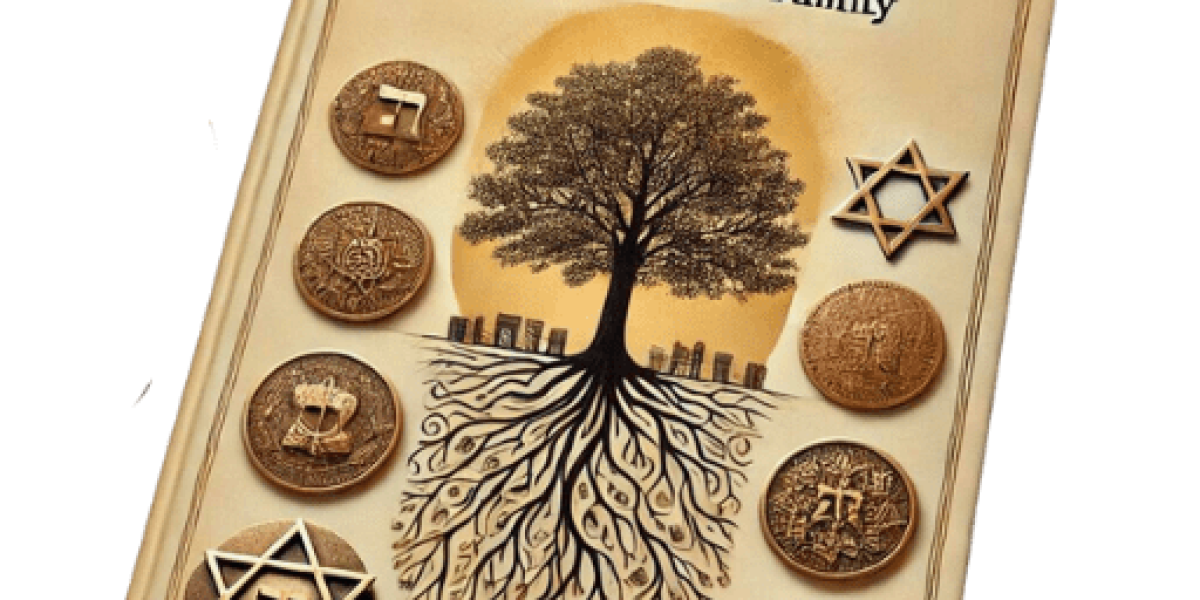
eBook: The Gutschein Family Legacy
We are proud to present the Gutschein Family Legacy eBook, a collection of stories, memories, and reflections that honor our ancestors and their journey. This eBook is a tribute to the strength, perseverance, and love that have shaped our family.
In this eBook, you’ll find:
- The history of our family, from Europe to Israel.
- Personal stories from our family members, recounting their experiences and the impact of historical events.
- A reflection on the importance of remembering and preserving our heritage.
This eBook is available to all family members and anyone who wishes to learn about the Gutschein legacy. Together, we continue to honor those who came before us and ensure that their memories live on.
Heartfelt Family Pilgrimages to the Memorial Stones
A Section of Gratitude
This section is dedicated to expressing heartfelt thanks to all family members who have the opportunity to light a candle in honor of our loved ones. Each flame represents not only remembrance but also the unity and love that keep our family’s legacy alive. Your gesture, no matter where you are, ensures that their memory continues to shine brightly through the generations.
Thank you for keeping the light of our history alive.
Sara Rojas, daughter of Fernando Rojas Gutschein and granddaughter of Edith, visits the memorial stones on December 21, 2024.
Dear family. After arriving in Berlin 8 hours later than expected (when I arrived at Barcelona airport in the early morning, my flight was expected to be delayed by 7 and a half hours) I didn’t want to end my day without coming to breathe in this place. It’s an honour to be a descendant of them. See you soon
Etan Smallman Gutschein recalls his journey to find out the fate of his Jewish family under the Nazis
80 Years Since the Liberation of Auschwitz: The Importance of Remembering
This week marks 80 years since the liberation of Auschwitz. Now Etan Smallman is looking back over a 15-year journey to uncover what happened to his Jewish family
I don’t know when I first learnt of the Holocaust. But, in truth, I never really needed a class or book to teach me about the industrial shooting, gassing and incineration of the majority of European Jewry; I only needed to look around my own family.
On my father’s side – his grandparents arrived in Britain from Poland and Lithuania around the turn of the 20th century – there are more cousins than I can count, and get-togethers are always boisterous and bustling affairs.
My mother’s family could not be more different. Both her parents fled Berlin in the nick of time in 1939. Many of their closest loved ones, including several siblings, did not have such fortune. This means that, even two generations down the line, that half of my family is scant, its remnants scattered across the world. My grandfather had a solitary niece with him in London.
What of those who did not make it out? I have long felt a sense of shame that I did not at the very least have their names.
When I visited the site, aged 21, I vowed that – after two decades of knowing little about my family history – I would put names to the gaps in my family tree. But it would be another decade and a half before I had the emotional and physical resources to do it. Chief among the latter has been getting access to the records of the International Tracing Service (ITS), still reuniting survivors, refugees and their descendants eight decades after it was founded by the Allies as an official registration facility for millions of missing people.
The first person I am determined to investigate is not actually a blood relative at all. She was the first wife of my grandfather, Suesskind, whom he wed in Berlin in 1938, a swastika stamped on their marriage certificate. I knew that she had been murdered – and that she would have no children to trace her story – but though I remember seeing their beautiful wedding photos as a child, I didn’t even know her proper name. Only Suesskind’s nickname for her, Cilly.
The only document I have that talks of my grandfather’s extraordinary life in his own words is a three-page letter, typed in 1982 – 86 years after his birth and two years before his death. “I was arrested three times by the Gestapo and beaten up,” he says, “and was told one evening, you bloody Jew will be shot the next day at 10 o’clock in the morning.”
It explains why within just six days of obtaining his Fremdenpass (alien’s passport) from the Nazis, he was in Southampton. He planned for his new wife – with whom he’d enjoyed 10 months of married life – to join him. But only nine days after he left the exits out of Germany were sealed after Hitler invaded Poland and triggered the Second World War. Suesskind tried, and was unable, to get her out.
In my research, I finally learned her proper name – Zila, née Schaulsky – in a document from World Jewish Relief, the British overseas aid charity once known as the Central British Fund for German Jewry. It records my grandfather visiting Bloomsbury House in London begging for any information on where his wife had ended up.
Within a year of her husband’s escape, Zila was working in Berlin as one of 80,000 slave labourers for Siemens, which today is one of the largest industrial manufacturing companies in Europe [in the late 90s the company set up a fund to compensate these labourers].
On 19 October, 1941 – a month after being compelled to wear a yellow star – Zila was taken on one of the first transports from Berlin to the Lodz Ghetto in central Poland. Testimony records that SS guards, some with horse whips, supervised the loading of the human cargo onto trains. When she arrived, she worked as a seamstress, perhaps making uniforms for the German military. Overcrowding, starvation and squalor were the main features of life in the ghetto.
Then, at 7am on 8 May, 1942, she was moved again, 30 miles northwest, on the 59th deportation from Lodz to Chelmno, the first stationary facility where poison gas was used for the mass murder of Jews. Within hours of her arrival, Zila, aged 38 – the age I am now – along with every one of the 953 others on that train, were killed before being dumped in a mass grave.
Sixteen months after her murder, oblivious, my grandfather and her brother were still trying to help her, corresponding by telegram about any possibility of getting her to Switzerland.
It was not only his wife; my grandfather had other loved ones who were missing. His sister, Feigel Resche Eilberg, was recorded and even photographed – with her husband Eisig – for a Nazi-ordered registration of the Jewish inhabitants of Krakow in 1940, ahead of deportation to that city’s ghetto. It is the only photo I have ever seen of my great-aunt.
From here, my search has so far gone cold, and I am yet to find conclusive evidence of Feigel’s fate. In 1941, the Krakow Ghetto was set up in Podgorze – the district in which Feigel and Eisig had celebrated their wedding back in 1907 – and two years later, in 1943, 2,000 Jews in the ghetto were shot, 2,000 taken for forced labour and 3,000 deported to Auschwitz. Pogroms against the few survivors continued in Krakow even after the war, in 1945 and 1946.
***
Later, Suesskind would go on to marry my grandmother, his second wife, Ilse. She, too, had losses to count. One of her brothers, Fritz, went to Palestine before making his life in the US. But I had no idea what happened to the other brother Hans Manasse, until a search of the ITS records, with the invaluable help of Elise Bath, who manages the only UK “portal”, at London’s Wiener Holocaust Library.
It tells me that in July 1942, he was placed on a manhunt list by the police in Berlin. The next list he appears on is three months later – for deportation, alongside Rose Manasse, who the records suggest is his wife. They were marched into a ransacked synagogue in Berlin, then packed onto trains for three days. According to one testimony, they were “herded together in the smallest space like dogs, and we were treated like them as well”. One woman gave birth during the journey. En route, “the SS guards took the opportunity to shoot at us with their carbines”.
When the couple arrived in Riga, Latvia, there is a small chance that my great-uncle was one of the 81 men sent for torturous labour. More likely, Hans and Rose were shot in the Rumbula or Bikernieki forests. Almost 1,000 souls were on that transport. Only 17 survived the war.
***
Eight decades later, these tragic conclusions are traumatic to uncover, if not exactly a surprise. Sharing them with family has been painful too, though all have been keen to know more.
What has been most upsetting has been computing how close these people were to me, despite how long-lost their stories once seemed. Some were first cousins my mother never got to meet. They should have been a lively chorus of elderly cousins, aunts and uncles providing the backdrop to my childhood. Instead, I have spent years trawling just to find evidence of their existence.
As incidents of anti-Jewish racism in the UK and elsewhere reach record highs, the ITS’s 30 million documents, relating the experiences of 17.5m people across 16 miles of shelving are a gargantuan riposte to Holocaust denial and distortion sweeping modern discourse. The deaths of all the relatives I have researched are a microcosm of a Europe-wide catalogue of brutality.
“That the Nazis succeeded in physically destroying people is horrific enough,” says Bath. “But when they’ve also destroyed all memory of them, that seems doubly wounding. There are no acts of rescue that we can perform. But what we can do is bring back people’s names. And at least we can try and remember that people existed.”
As the baton of memory is being passed on, the “third generation” is grappling with its bequest. Jesse Eisenberg, writer, director and star of A Real Pain, described as a “Holocaust buddy movie”, said that for the Shoah’s grandchildren, the silence and taboo of the second generation has lifted: “Younger people talk about it a lot more, with a more analytically removed perspective.”
It may explain my drive to pursue this research. But there are some things that talking cannot change. At Yad Vashem, the World Holocaust Remembrance Centre in Jerusalem, researchers have spent almost a century trying to collect the names of every murdered Jew, but there are still well over a million condemned to total anonymity. No descendants, no grave, no picture, no name.
This Holocaust Memorial Day, I will finally be able to light a candle for Zila, for Hans, for Rose, for Feigel and for Eisig.